
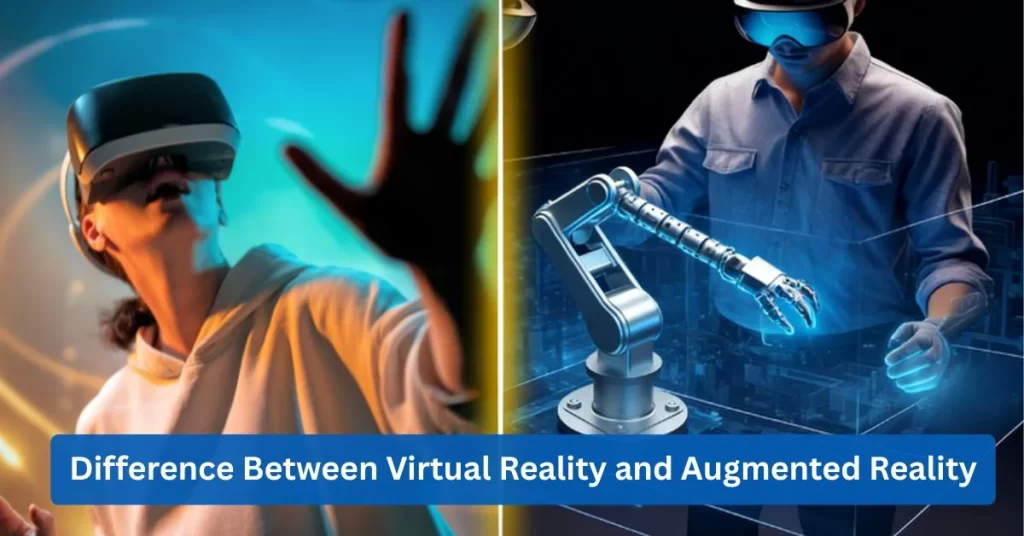
Difference Between Virtual Reality and Augmented Reality
Augmented reality and virtual reality are among the big tech breakthroughs that are modifying digital content’s interaction with the physical world. They are often seen as one, the difference between virtual reality and augmented reality is important and impacts how each technology is being utilized and they do not present the same kind of experience at all.
Augmented Reality (AR) provides a digital overlay of images, videos, or objects onto our world. Virtual Reality (VR), removes the user from the “real world” and places them in a completely simulated environment using headsets and advanced motion focus.
Understanding this distinction between Augmented Reality (AR) and Virtual Reality (VR) is essential for choosing the right option for various situations. As the demand for VR and AR technologies increases within different fields, it is becoming increasingly vital to distinguish between these two technologies.
Knowing how and in what particular ways they operate allows individuals to select the best technology based on their desired outcome whether it is for entertainment, education, or for business purposes.
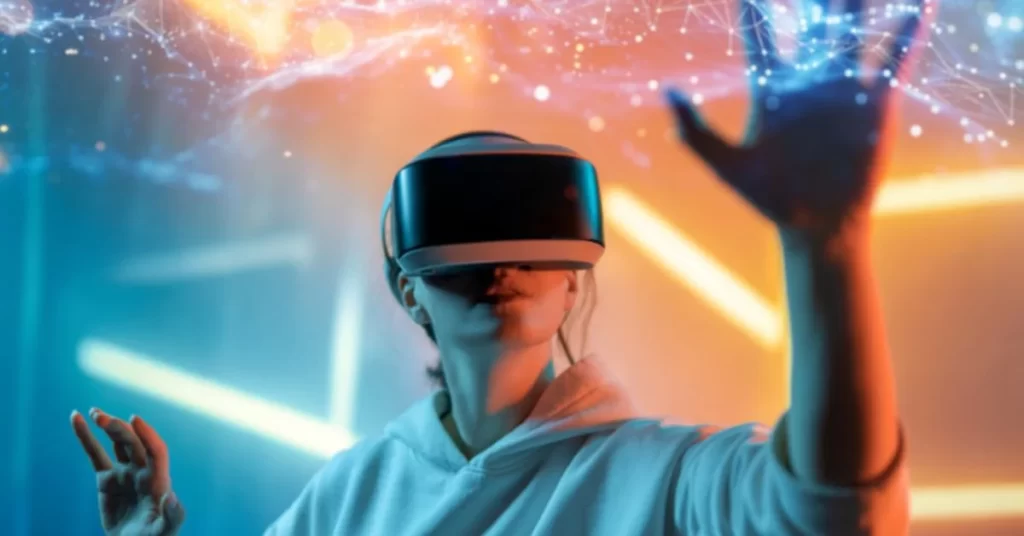
What is Virtual Reality (VR)?
VR is a computer-generated experience that puts people in the virtual world that feels real. When you wear a VR headset, the actual world disintegrates and you become part of an imaginary one.
How VR works
Several important parts of VR technology need to function together:
- VR headsets that show 3D images right in front of your eyes.
- Sensors and Cameras, tracking devices that allow the user to track the user’s position in 3-D space.
- Controllers that enable people to interact with and manipulate virtual objects.
- Powerful software that creates realistic environments in real-time.
This makes users feel that they are in the virtual environment, which gives them a strong sensation of presence.
Different kinds of VR experiences
Many different fields use virtual reality:
- Gaming: Games that fully immerse users in virtual worlds.
- Training: Simulations for pilots, doctors, engineers, and those in the military.
- Virtual classrooms, science experiments, and recreations of historical events.
- Simulation: Safe places to rehearse for situations that are very risky.
Benefits of VR in Different Fields
There are a number of key benefits to VR:
- Learning and training without risk.
- More involvement and greater memory retention.
- Savings on costs compared to real-life simulations.
- Realistic visualization for planning and design.
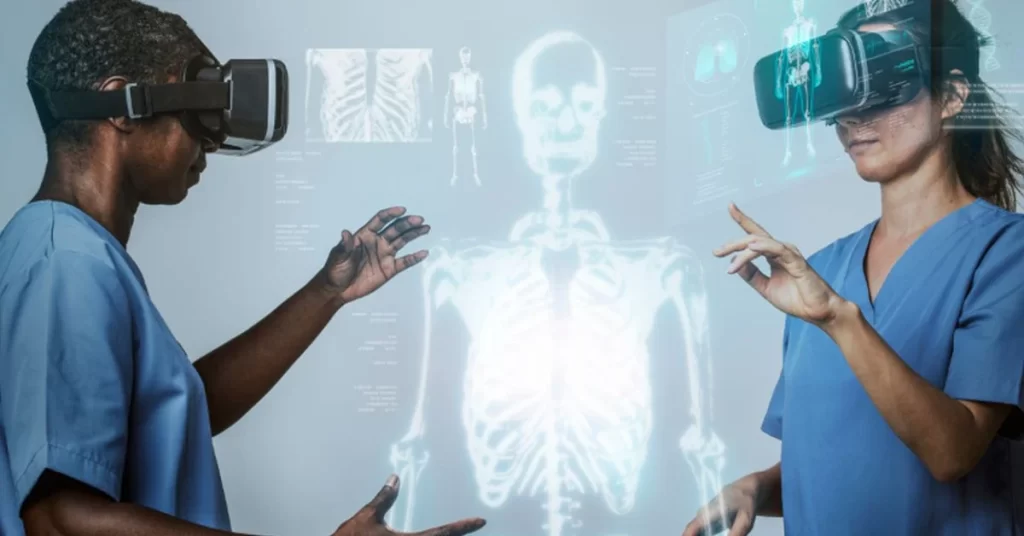
What is Augmented Reality (AR)?
Augmented reality adds digital elements in order to enhance the real world. AR does not affect reality; it makes it more interesting and enjoyable by creating engaging experiences. As a tool, AR connects the real world to the digital world. AR apps use gadgets with cameras, like smartphones or AR glasses, to show digital things.
AR turns common situations into more attractive and informative interactions, which are supported by a wide range of applications from recreational ones to important corporate training and visualization tools.
How AR Works
- Most smartphones and tablets come equipped with built-in camera and motion detection technologies used in all forms of AR applications.
- Microsoft’s HoloLens and other AR headsets or glasses.
- A technology that adds virtual items to your view of the real world.
AR, on the other hand, maintains people connected to their surroundings while providing useful or fun digital content.
AR in Real Life
A lot of individuals use AR without even knowing it:
- Filters from Snapchat and Instagram.
- AR navigation apps that show you how to get to real places.
- Apps for stores that let you see furniture or clothes before you buy them.
- Pokémon Go and other mobile apps.
- Advantages of AR in business, education, and health care.
Augmented reality provides us:
Learning experiences that are fun and interactive.
- Enhanced consumer engagement in stores.
- Information in real time for professionals.
- More precise medical treatments.
What Are the Key Differences Between VR and AR?
Looking at how each technology works and what kind of experience it gives makes the VR and AR differences much clearer. Augmented reality adds digital things to the real world to give more information and context. Virtual reality puts people inside a computer-made setting, which takes the place of the real world.
1: Immersion
VR: This technology blocks the real world and transports users to a digital place where they can see and hear simulated sights and sounds.
AR: Ads digital pictures or information to the real world, users can stay aware of what’s going on around them. This highlights the AR vs VR contrast, VR eliminates reality, while AR enhances it.
2: Equipment
VR: The utilization of VR technology requires certain pieces of equipment; VR glasses are required along with motion controllers and sensors to track your movements.
AR: It could run on everyday consumer devices like smartphones, tabs, or AR glasses.
3: User Experience
VR: Interactive, offering hands-on engagement within a controlled digital environment that responds to user movements.
AR: Enhanced and context-based, delivering digital content that adapts to real-world locations, objects, or user behavior.
4: Applications
VR: Gaming, training, simulations, virtual tours, and immersive learning experiences where full focus and isolation are beneficial.
AR: Retail, education, healthcare, navigation, and industry, where real-time information and visual guidance improve efficiency and understanding. This comparison of VR and AR clearly shows that VR focuses on immersion, while AR focuses on enhancement
VR vs AR: Which One Should You Choose?
When choosing between VR and AR, the best technology for immersive experience depends on the objectives of the project you’re working on.
Things to Think About
VR is better for simulations, whereas AR is better for helping people in the actual world.
- Price: AR is usually cheaper because it works with devices that are already out there.
- Hardware: VR needs special equipment.
Recommendations for specific industries
AR for interactive lessons and VR for realistic simulations in education
- Healthcare: AR for diagnoses and VR for training surgeons
- VR for gaming and AR for mobile and social interactions are both fun.
New Trends and Future Possibilities
Both technologies are changing quickly, and hybrid solutions are becoming increasingly popular.
The greatest technology for an immersive experience depends on how much you want to get away from reality.
Real-World Examples of VR and AR
Examples of virtual reality and augmented reality
Popular VR apps:
- Oculus VR game systems
- Virtual tours for travel and real estate
- Simulators for medical and flight training
Popular AR Apps:
- Pokémon Go
- IKEA Place lets you see how your house will look
- Apps for navigating AR
Case Studies of Businesses Using VR and AR
AR is used by companies as a captivating tool for customers, and VR is for training employees, which brings user enjoyment and productivity as well.
For example, the firms give a secure environment for difficult activities staff training through virtual reality (VR) simulations and augmented reality (AR) allows the shoppers to visualize the products in the real world.
Comparison Table VR vs AR
| Feature | Virtual Reality (VR) | Augmented Reality (AR) |
| Immersion | Fully immersive | Overlays digital info on real world |
| Equipment | VR headset, controllers | Smartphones, AR glasses |
| Experience | Separate from real world | Enhances real-world environment |
| Applications | Gaming, simulations, virtual tours | Retail, education, navigation |
| User Interaction | High interactivity with controllers | Interaction mostly via device touch or gestures |
This table summarizes the virtual reality vs augmented reality comparison clearly.
Common Misconceptions About VR and AR
Virtual Reality (VR) and Augmented Reality (AR) are rapidly growing technologies, but many people still have misconceptions about them. Clearing up these misunderstandings helps individuals and businesses make better decisions about how to use VR and AR effectively.
- They are the same thing, but VR and AR have different uses.
- They are just for games: Both are common in business and school.
- They cost too much: AR can be quite cheap.
Drawing Distinctions between Immersive and Augmented Experiences. VR makes a new digital world, AR makes the one that’s already there, better. Understanding these myths about virtual reality and myths about augmented reality helps clarify their true value.
The Future of VR and AR
The future of virtual reality and augmented reality is driven by less expensive and light devices, better visuals and improved motion tracking that make experiences more comfortable and realistic.
Integration with AI and Emerging Technologies
Current AR and VR trends demonstrate strong integration with emerging technologies leading to smarter and adaptable applications. An example is seen in AI-powered AR systems which can help technicians instantly by troubleshooting equipment problems and VR training simulations that can modify the difficulty.
Forecasts for Business, Education, and Entertainment
As mixed reality continues to evolve, business, education and entertainment will gradually incorporate digital and physical environments to develop impactful experiences.
FAQ About VR and AR
What is the main difference between VR and AR?
VR creates a full digital world. AR adds digital things to the real world. One probably won’t replace the other. They work well together.
Can AR and VR be used together?
Yes. Think of a mixed reality headset letting you place a virtual screen on your real wall while still seeing your room. That’s the combined strength you’re talking about.
Is AR better than VR?
AR isn’t better than VR; they’re different tools. AR adds to your real world. VR creates a whole new one. You pick based on the task.
Which industries benefit most from VR?
Industries such as gaming, healthcare, education, real estate, and manufacturing benefit most from VR. It is widely used for training, simulations, and virtual walkthroughs.
How can VR or AR technology be applied in industry?
VR is used for employee training, simulations, and skill development in a risk-free environment. AR provides real-time assistance, visualization, and workflow support on the job.
How much does AR or VR technology cost?
AR is generally more affordable because it runs on smartphones and tablets. VR is more expensive due to specialized headsets, hardware, and setup requirements.
Are VR and AR safe for children?
VR and AR are safe for children when used in moderation and with supervision. Many platforms include age guidelines and parental control options.
Can AR replace VR in the future?
AR probably won’t take VR’s place completely. Each has its own job, and they usually work better side by side.
What are the challenges of implementing VR and AR in business?
The big challenges are high costs, technical complexity, and training staff. Integrating it into current systems is another major hurdle. Finally, scaling it up company-wide is often difficult