
How Is VR Used in Medical Training?
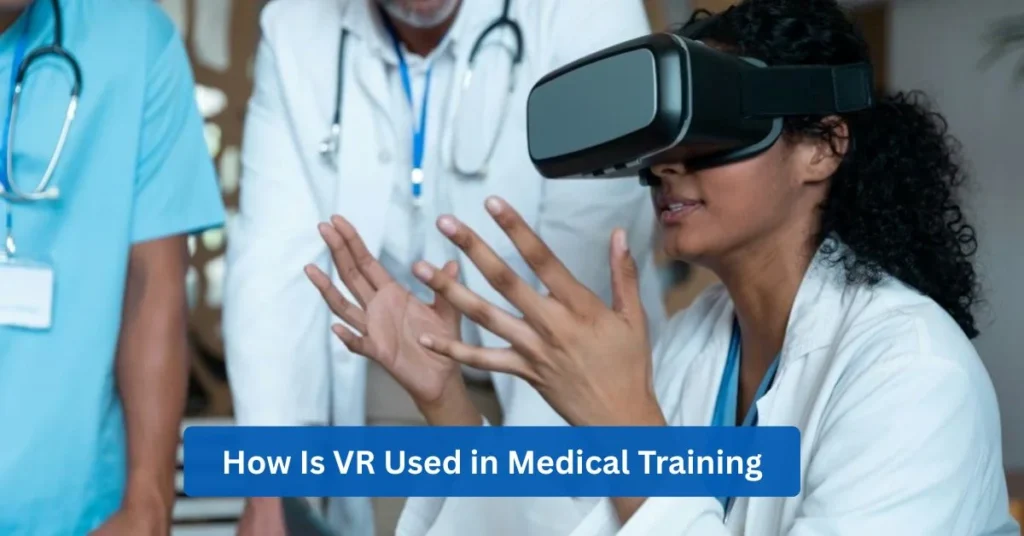
The way we prepare healthcare professionals is currently shifting from passive observation to active participation. Today, the adoption of virtual reality medical training has moved beyond a tech trend and into the core of the clinical curriculum. By providing a high-fidelity environment that does not risk human life, VR allows residents to bridge the gap between their textbooks and the operating room with unprecedented confidence.
As hospitals face increasing pressure to reduce medical errors, the traditional see one, do one, teach one model is being replaced by medical training in virtual reality. When a student puts on a headset today, they enter a world where the floors, walls, and patients are all interactive, allowing them to perform a motion hundreds of times in a digital space. This level of immersion builds the mental muscle memory and professional comfort that a simple textbook could never provide.
What Is Virtual Reality in Healthcare Education?
Modern medical training in virtual reality is built on three specific technological foundations, these are:
3D Medical Simulations
These high-definition reconstructions of human anatomy allow students to turn, dissect, and even fly through complex structures like the heart. By moving beyond flat 2D scans, learners get a much better surgical simulation training and understanding of how different vessels and nerves relate to each other.
Interactive Clinical Scenarios
Digital patients in these programs react in real time to every choice a student makes during a session. If a mistake is made, the patient might enter anaphylactic shock, forcing the trainee to manage a high-pressure emergency without any real-world risk.
Motion Tracking and Haptic Feedback
Specialized tools and haptic gloves now provide tactile resistance that mimics the feel of cutting through different types of human tissue. This sense of touch is the final piece of the puzzle that makes the brain truly believe it is performing a real procedure.
Difference Between VR, AR, and Mixed Reality in Medicine
Choosing the right VR medical training solutions often starts with understanding how these different layers of reality function in a clinical setting. This table breaks down exactly what sets them apart in a modern hospital.
Technology | What You See | Main Medical Focus |
Virtual Reality (VR) | Total Immersion | Surgical simulation training and high-stress trauma drills. |
Augmented Reality (AR) | Digital Layers | Live surgical guidance and looking at patient data mid-procedure. |
Mixed Reality (MR) | Hybrid Interaction | Advanced clinical skills training simulation using physical props. |
Extended Reality (XR) | The Big Picture (catch-all term for AR, VR, and MR) | The total digital shift of healthcare simulation technology. |
Evolution of Simulation Based Learning in Medicine
Medical schools are shifting away because you just can’t hit a reset button on a cadaver when a student makes a mistake. Using virtual reality medical training lets a top-tier surgeon in New York virtually step into an OR with a resident in London to mentor them in real time. This kind of global setup means that learning the most advanced life-saving skills is no longer limited by where you live or how many physical specimens a lab has on hand.

Applications of VR in Medical Education and Clinical Training
Laparoscopic and Minimally Invasive Surgery Training
Medical VR training helps students master the strange coordination needed to operate using a small camera feed. These simulations provide a safe way to practice the reverse movements, where moving your hand left moves the tool right.
Robotic Surgery Simulation
Surgeons use VR like a flight simulator to get comfortable with the controls and depth of the Da Vinci system. This allows them to practice complex movements and emergency steps without taking up an expensive robotic suite in a hospital.
Operating Room Environment Simulation
This goes beyond the incision to simulate the whole atmosphere of the room, including the noise of the many monitors. It teaches lead surgeons how to manage distractions and talk clearly with the nursing team during a very critical moment.
Emergency and Trauma Response Training
CPR and life-saving procedures
Medical VR training for CPR gives instant feedback on the depth and rhythm of compressions to meet life-saving standards. Trainees can practice responding to different heart rhythms and placing a defibrillator in a variety of very stressful virtual environments.
Mass casualty incident simulation
These scenarios allow responders to practice triage on many victims in chaotic settings like a building collapse or transit accident. It tests their ability to prioritize care and manage limited resources under intense time pressure that is hard to replicate.
Disaster preparedness training
Hospitals use VR to run digital evacuation drills, so staff learn the exact location of equipment in their specific building. This ensures that in a real crisis, the staff can move quickly through the halls and follow protocols without stopping.
Nursing and Clinical Skills Development
Patient assessment simulations
Nurses practice identifying subtle visual cues in virtual patients, like the facial drooping of a stroke or some respiratory distress. These modules often include AI dialogue, allowing the nurse to practice asking the right questions to form a clinical picture.
Medication administration practice
This training focuses on the five rights of medication to prevent errors like giving the wrong dose to a patient. VR provides a safe place to learn how to scan wristbands and verify orders without any risk of a mistake.
Infection control scenarios
VR makes invisible germs visible by using digital overlays to show how bacteria spread from a bedrail to a hand. It is a powerful way to teach the importance of hand hygiene and the proper way to use protective equipment.
Anatomy and Physiology Visualization
3D anatomy exploration
Students can peel back layers of tissue and walk through a larger-than-life model of the beating human heart. This spatial understanding of how organs fit together is vital for both general practice and the most specialized types of surgery.
Organ system interaction models
These models show how a failure in one system, like the lungs, creates a cascading effect on the whole body. It helps students understand the body as a connected ecosystem rather than just a collection of many separate individual parts.
Pathology simulation
Instead of just looking at a healthy organ, students can interact with digital models of diseased tissue, like a lung. They can observe how these diseases physically change the structure and function of the human body over a long time.
Mental Health and Therapy Training
Psychiatric patient simulations
Trainees practice de-escalating tense situations with virtual patients who are experiencing manic episodes or even some visual hallucinations. It provides a safe space to learn which verbal cues and body language help calm a patient in real life.
Communication skill development
This training helps doctors learn how to deliver difficult news or handle sensitive conversations with empathy and a professional tone. The AI avatars can respond with many emotions, from grief to anger, forcing the trainee to adapt their own style.
Behavioral therapy practice
Clinicians use VR to learn how to facilitate exposure therapy for patients with PTSD in a controlled digital environment. It allows the therapist to practice managing stress levels while introducing the triggers that the patient needs to eventually confront.

Benefits of Using Immersive Simulation in Healthcare Training
The move toward virtual reality medical training is gaining momentum because it offers several game-changing advantages that traditional methods simply cannot match. By shifting from static tools to VR for medical training, we are seeing a massive upgrade in how clinicians prepare for the real thing.
Risk-Free Skill Development
The biggest perk here is that students can fail safely without any real-world consequences for a patient. If a trainee nicks an artery in a digital OR, they see the results immediately and can just hit the reset button to try again.
Improved Knowledge Retention and Engagement
The human brain tends to store a VR session as an actual lived memory rather than just some text read from a boring book. Adding gamified elements to these lessons makes the whole process much more engaging and helps students stay focused for much longer.
Cost-Effective and Scalable Training Solutions
Setting up one VR room is often much cheaper than maintaining multiple physical labs filled with expensive medical gear. Once the software is ready, it can be sent to thousands of students globally at a very low cost per person.
Real-Time Performance Analytics and Assessment
AI systems can track every tiny hand movement to give students an objective score on their surgical precision. This data ensures that a resident has truly mastered a skill before they ever step into a real operating theater.
Types of VR-Based Clinical Training Systems
Hospitals generally choose from these three tiers of technology depending on their budget and needs.
Standalone VR Headsets for Healthcare
These all-in-one devices, such as the Meta Quest 3, are becoming the favorite for many nursing programs because they don’t require complex cabling or expensive PCs. Many students are now using VR medical training glasses for on-the-go study, allowing them to practice anatomy or patient assessment in a breakroom or even at home.
Cloud-Based Medical Simulation Platforms
Modern platforms allow for multi-user virtual classrooms where an instructor in one city can guide a group of students spread across the globe. These systems use remote collaboration tools to ensure everyone in the virtual operating room is seeing the same thing at the exact same time, which is perfect for team-based training.
Haptic-Enabled and AI-Integrated Solutions
If you want to truly feel the resistance of skin or bone during a procedure, you need a system equipped with high-end tactile feedback simulators. These setups are usually paired with intelligent performance monitoring that uses AI to track your every move and give you an objective score on your surgical precision.
Industries and Institutions Using VR for Healthcare Education
Industries everywhere are realizing that immersive tech isn’t just a flashy extra anymore—it’s become the new baseline for professional readiness.
Medical Schools and Universities
Most top-tier universities now weave VR for medical training directly into their curriculum so students can get hands-on experience before they ever see a real patient. This tech allows for intense pre-clinical and residency training where students master the basics in a risk-free digital lab.
Hospitals and Healthcare Organizations
Hospitals use VR to make staff onboarding much faster by letting new hires virtually walk through the facility and practice protocols from day one. It is also the new standard for continuing medical education, helping veteran doctors keep their skills sharp on the latest techniques without ever leaving the building.
Military and Emergency Services
In the military, combat medical simulation in VR prepares battlefield medics to perform complex, life-saving surgeries under the simulated stress of an active conflict zone. These systems are also vital for crisis response training, letting first responders coordinate their efforts during large-scale disasters in a perfectly safe virtual environment.
Challenges and Limitations
Implementing this tech at a hospital or university has some real hurdles that you have to navigate carefully. While the upside is huge, the practical side of things can be a bit of a headache for administrators.
Hardware and Infrastructure Costs
Getting enough high-end headsets for a whole class and upgrading to lightning-fast Wi-Fi is an upfront investment for most schools in 2026.
Motion Sickness and User Adaptation
About one in ten people still get that “seasick” feeling in VR because their eyes see movement, but their inner ear doesn’t feel it.
Regulatory and Compliance Considerations
The FDA and other big groups are still working on the official rules for how many VR hours can count toward real clinical credit.
Technical Learning Curve for Educators
A lot of veteran doctors are incredible at surgery, but might feel like they require training when they have to troubleshoot a VR headset for a student.
Even with these bumps in the road, the tech is getting smoother every day and these issues are becoming much easier to handle.
Future Trends in Immersive Healthcare Education
AI-Powered Personalized Learning Paths
Smart algorithms are now starting to watch how you practice and will actually change the difficulty of a simulation in real time based on your performance. If the system sees you are struggling with a specific surgical cut, it will give you more practice in that area until you have it down perfectly.
Digital Twins in Medicine
This is a massive leap forward where doctors can create a 3D digital replica of a specific patient’s actual heart or brain to practice on. It means a surgeon can do a dry run of your specific surgery the night before, so they already know exactly what to expect when they walk into the OR.
Integration with Telemedicine Training
As more doctors see patients over video calls, VR is being used to help them master the art of remote diagnosis and digital bedside manner. It is a great way to learn how to read a patient’s body language through a screen and use digital tools to give a more accurate exam from a distance.
Data-Driven Skill Assessment Systems
We are moving away from subjective grading and toward systems that track every single twitch of your hand to give you an objective score. This data helps students see exactly where they rank compared to expert surgeons and identifies the tiny habits they need to fix to become top-tier clinicians.
With these trends taking off, the gap between practicing and actually doing it is almost entirely disappearing, which is a huge win for patient safety.
FAQs About Virtual Reality Medical Training
Is immersive simulation effective for surgical training?
Yes, it is highly effective at improving procedural accuracy and reducing the time it takes to master complex skills. It has been shown that surgeons who train in VR move more efficiently and make fewer errors during live surgery.
Can virtual platforms replace cadaver labs?
They are a powerful supplement that offers many things cadavers cannot, such as the ability to see a beating heart or flowing blood. However, many programs still use a combination of both to ensure students understand the real weight and texture of human tissue.
What are the best VR medical training systems available?
Currently, companies like Osso VR and MedVR Education are leading the market in high-quality simulations that are used by major hospitals worldwide.
How much does a VR medical training solution cost?
The price ranges from a few hundred dollars for basic hardware to over three hundred thousand dollars for an enterprise-level, custom simulation suite. It depends on how many people you are training and how realistic the haptic feedback needs to be.
Can VR help reduce the time it takes to graduate?
By allowing students to practice at any time without needing a physical lab or instructor present, many programs are finding that students can reach competency much faster, potentially shortening the overall length of medical training.
How does VR help with patient empathy?
There are simulations where a doctor can inhabit the body of a patient with a specific condition, like macular degeneration or hearing loss. This helps the doctor understand the daily struggles of their patients on a much deeper level.