
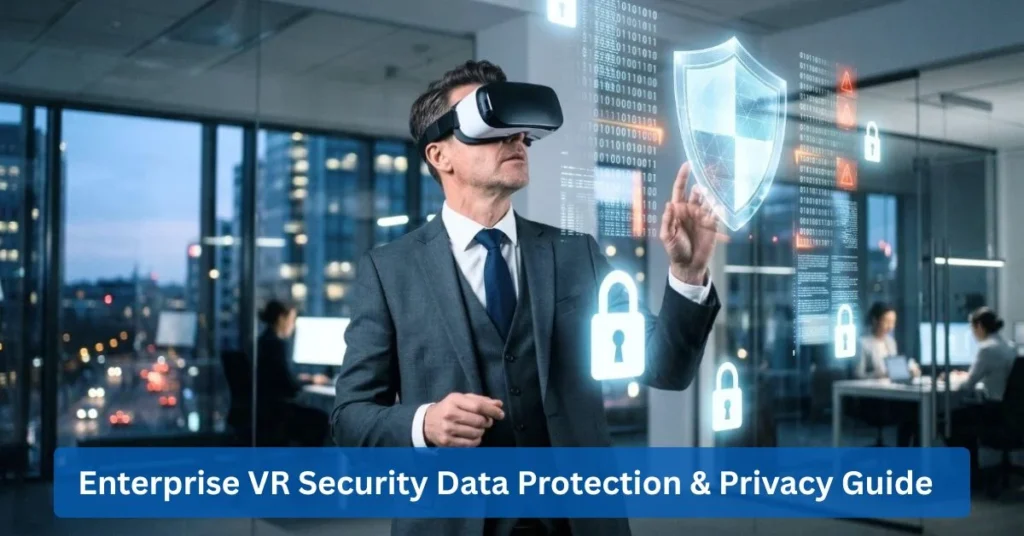
Enterprise VR Security: Protecting Virtual Systems Today Now
As 2026 goes on, it’s clear to see that immersive technology is more than just games; it’s also where real business happens. But here is the catch: while we are busy building virtual boardrooms and high-tech training sims, we are also opening a massive new door for hackers. Integrating immersive tech brings a whole new frontier of enterprise VR security challenges that most IT departments aren’t fully ready for. This guide is here to help you navigate the messy world of VR data security so you can protect your most sensitive assets without killing the innovation vibe.
Importance of VR Data Security in Modern Enterprises
The shift toward spatial computing means that enterprise VR security is no longer just a tech guy problem; it is a boardroom priority. As the hardware gets sleeker and more capable, the sheer volume of data being sucked up by these devices is growing exponentially. If you are not thinking about security now, you are basically leaving the keys to your virtual office under a digital doormat.
The Rise of Virtual Reality in Business Operations
- Training and simulation environments: Companies are now using VR to train employees in high-stakes environments—everything from complex surgical theaters to dangerous oil rigs. It is great for reducing physical risk, but every session creates a digital footprint that needs guarding.
- Remote collaboration and immersive meetings: Forget Zoom fatigue. Teams are meeting in virtual boardrooms where they share sensitive intellectual property in real-time. But if that virtual room isn’t locked down, you might as well be holding your strategy meeting in a public park.
Why VR Data Security Is a Growing Concern
Let’s be real: VR data security is uniquely complicated. It is not like securing a laptop, where you just worry about files and passwords.
- Increased data collection in immersive systems: These headsets have sensors that track everything, from the layout of your physical room to your subconscious physiological responses.
- Expansion of enterprise attack surfaces: Every single headset is an IoT endpoint. In the eyes of a hacker, that is just one more entry point into your network, which is why finding secure VR solutions is non-negotiable.
Prioritizing enterprise VR security early in your adoption phase ensures that your leap into the future doesn’t end in a security nightmare.

Key Enterprise VR Privacy Concerns Organizations Must Address
If you want to build a real defense, you have to understand the specific enterprise VR privacy concerns that keep CISOs up at night. Unlike a standard web browser, a VR headset is essentially a biometric vacuum, pulling in data you didn’t even know you were giving away.
Types of Sensitive Data Collected in VR Environments
Biometric and Behavioral Data
The heavy hitters in enterprise VR privacy concerns usually involve the harvesting of biometric data in VR.
- Eye tracking: This can reveal what a person is interested in, or even signal certain health conditions before a doctor does.
- Motion tracking: Believe it or not, gait analysis can identify a person just by how they move their head and hands.
- Voice patterns: We use them for communication, but they are also prime targets for deepfake exploitation in 2026.
User Identity and Authentication Data
Keeping login credentials and multi-factor authentication records safe is a massive deal. If someone steals your identity in VR, they don’t just get your emails; they can literally walk into a virtual meeting as you and talk to your boss face-to-face.
Proprietary Business and Collaboration Data
Your virtual reality data protection strategy has to cover 3D models, product prototypes, and meeting recordings. If a competitor gets hold of a prototype file from your virtual workspace, it is the modern-day equivalent of breaking into a safe.
Risks of Data Misuse and Unauthorized Access
- Internal threats: You have to worry about employees wandering into virtual areas where they don’t have clearance.
- External cyberattacks: Hackers are already targeting VR firmware with specialized ransomware.
- Third-party platform vulnerabilities: You are only as secure as the cloud infrastructure your VR provider is using.
Tackling enterprise VR privacy concerns means looking at the big picture—protecting both the digital files and the biological data of your team.

Common VR Cybersecurity Risks in Enterprise Environments
You can’t really fix a problem if you haven’t identified it yet, so it’s worth taking a moment to look at where VR cybersecurity actually tends to break down. In most companies, the real trouble starts at that messy intersection where the hardware, the software, and simple human error all run into each other.
Device-Level Vulnerabilities
VR headset security flaws and firmware exploitation are at the top of the list for VR cybersecurity risks. If a headset’s operating system gets compromised, an attacker can literally see through the user’s eyes. That is a level of privacy breach we’ve never seen with traditional tech.
Network and Cloud-Based Threats
Most enterprise virtual reality security risks pop up when data is moving from point A to point B.
- Man-in-the-middle attacks: This is where someone intercepts the stream between the headset and your server.
- Insecure cloud storage: If you are storing room maps or sensitive data in an unencrypted cloud, you are asking for trouble.
- API vulnerabilities: These are the weak links between your VR app and your main company databases.
Identity and Access Control Weaknesses
If you don’t have tight VR access control mechanisms, you are going to have people in places they shouldn’t be. Without solid identity management in VR systems, verifying that the avatar standing in front of you is actually who they say they are becomes almost impossible.
Staying proactive about VR cybersecurity risks means patching the holes before a hacker even finds them.
Secure VR Solutions for Protecting Enterprise Data
So, how do we fight back? You need secure VR solutions that go way beyond a simple password. We are talking about a multi-layered approach to keep things locked down.
Data Encryption in Virtual Reality Systems
Think of data encryption in virtual reality as your last line of defense. Even if someone steals the data, they shouldn’t be able to read it.
End-to-end encryption for VR:
This makes sure only the people in the conversation can actually hear or see what is happening.
Secure Data Transmission Protocols:
Using end-to-end encryption for VR stops virtual eavesdropping dead in its tracks.
Enterprise-Grade Identity Management in VR
The best secure VR solutions usually rely on three things:
- Role-based access control (RBAC): Users only get into the virtual rooms they need for their specific job.
- Multi-factor authentication (MFA): Using something like a biometric pin to prove you are you.
- Zero-trust security frameworks: The “never trust, always verify” approach works just as well in VR as it does in standard IT.
Secure VR Collaboration Platforms
A truly secure VR collaboration platform gives you things like controlled file sharing and encrypted communication channels. Remember, virtual reality data protection doesn’t mean much if the platform you are using is selling your data out the back door.
Investing in high-end secure VR solutions is the only way to keep your intellectual property safe in a world without physical walls.
Compliance and Regulatory Requirements for Virtual Reality Data Protection
Let’s talk about the legal stuff. Compliance isn’t a maybe anymore—it is a must. Keeping up with VR compliance regulations is a full-time job for legal teams in 2026.
GDPR Compliance in VR Systems
If you are doing business in Europe (or with Europeans), GDPR compliance in VR is a massive hurdle. You have to follow:
- Data minimization principles: Don’t collect data just because you can. Only take what the app actually needs.
- User consent management: Your team needs to know exactly when their biometric data in VR is being recorded and why.
HIPAA and Industry-Specific Regulations
In the medical world, HIPAA compliance in VR is the law. If you are using VR for patient therapy or training, your virtual reality data protection has to be just as tough as it is for any other medical record.
Building a Compliance-Ready VR Infrastructure
To actually meet these VR compliance regulations, you need:
- Audit trails: You need a log of exactly who was in the virtual space and what they did.
- Monitoring and reporting tools: You need to see your enterprise VR security status in real-time, not in a weekly report.
Following VR compliance regulations isn’t just about avoiding fines—it is about building trust with your users and partners.
Best Practices for Strengthening Virtual Reality Data Protection
Conducting Regular VR Security Risk Assessments
Don’t wait for a breach to find out you have a problem. Find those VR cybersecurity risks early.
Implementing Secure Software Development Practices
If you are building your own apps, make sure there are no backdoors for hackers to walk through.
Vendor Risk Management for VR Platforms
You need to vet the VR security solutions that the hardware guys are selling you. Don’t just take their word for it.
Employee Training on Immersive Environment Security
Most breaches happen because of human error. Teach your team not to fall for virtual shoulder surfing.
Continuous Monitoring and Threat Detection
Use AI to keep an eye out for weird patterns in your VR traffic.
Real virtual reality data protection isn’t a one-and-done thing; it is a constant cycle of checking and improving.
How to Evaluate Enterprise-Grade VR Security Solutions
When you’re out shopping for VR security solutions, don’t just look at how comfortable the headset is. You need to look under the hood at the enterprise VR security architecture.
Essential Security Features to Look For
- Encryption standards: Ask if their data encryption in virtual reality is AES-256 or better.
- Access control mechanisms: Does the system play nice with VR access control mechanisms like your existing SSO?
- Data storage architecture: Is there actually secure cloud storage for VR, or is it just a basic server?
Questions to Ask VR Security Providers
- Who actually owns the data we generate?
- What compliance certifications (like SOC2 or ISO 27001) do you have?
- What happens if there is a breach? What is your incident response protocol?
Long-Term Scalability and Risk Mitigation Strategy
Think about the future. Your enterprise VR security plan needs to work when you have 1,000 headsets, not just the 10 you have now. Without automated identity management in VR systems, you are going to hit a wall very fast.
Doing your homework on VR security solutions now will save you from a massive headache and a possible lawsuit later.
The Future of VR Cybersecurity
The fight for enterprise VR security is constantly changing. Here is what we are seeing on the horizon:
AI-Driven Threat Detection
We are starting to use AI to spot bots and bad actors in virtual worlds before they can do any damage.
Advancements in Secure VR Infrastructure
Hardware is getting secure enclaves specifically to protect biometric data in VR.
Preparing for Emerging VR Privacy Challenges
As VR blends with AR into Extended Reality (XR), the enterprise VR privacy concerns will start to include the physical world around the user, too.
Staying ahead of the game in VR data security is going to be a huge competitive advantage as the virtual office becomes the new standard.
FAQ About Enterprise VR Security
What data security risks should enterprises consider before adopting virtual reality technology?
Before you jump in, look at enterprise virtual reality security risks like device firmware holes, VR cybersecurity risks in the network, and how your biometric data in VR is being stored.
How can businesses protect sensitive data in enterprise VR environments?
It is all about layers. Use secure VR solutions that include heavy-duty data encryption in virtual reality, strict VR access control mechanisms, and end-to-end encryption for VR to keep the bad guys out.
What are the main privacy concerns associated with virtual reality in organizations?
The biggest enterprise VR privacy concerns usually come down to the tracking of a user’s body and eyes, and the safety of proprietary 3D files stored in secure cloud storage for VR.
What security features should companies look for in secure VR solutions?
Top VR security solutions should offer identity management in VR systems, verified GDPR compliance in VR, and a platform that offers real virtual reality data protection through secure VR collaboration platforms.
How do compliance regulations like GDPR and HIPAA apply to enterprise VR systems?
Basically, VR compliance regulations mean you can’t just take people’s data without asking. If you are in healthcare, HIPAA compliance in VR is even stricter about how you handle patient info in those virtual spaces.