
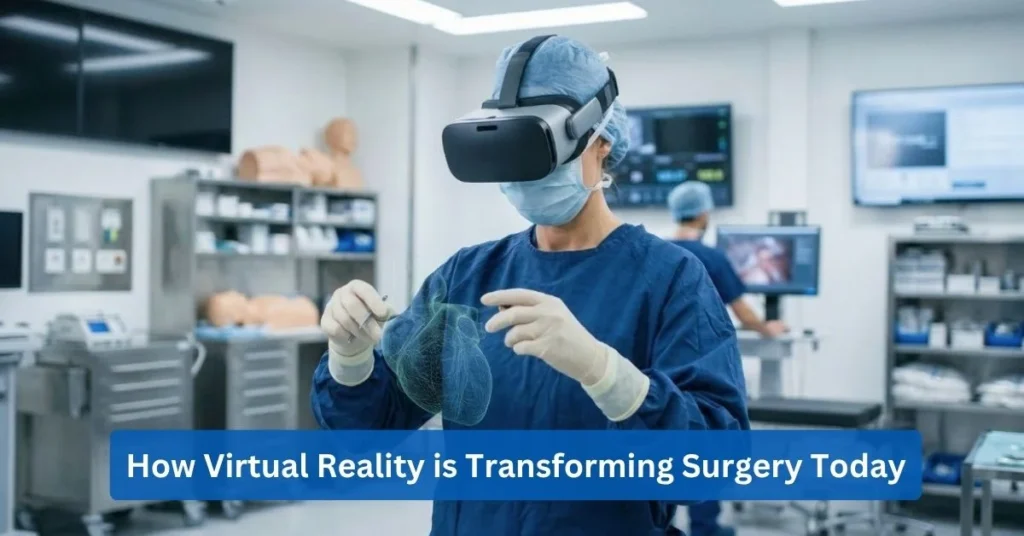
How Virtual Reality is Transforming Surgery Today
Virtual Reality for Surgery demonstrates its capacity to change medical training and surgical planning and execution at present time. Virtual reality technology develops surgical training environments through its combination of immersive visualization, real-time data, and advanced simulation technology. Surgical programs in hospitals, medical schools, and research institutions implement virtual reality technology to achieve better clinical results while developing their medical professionals’ skills.
Surgical training programs depend on three main educational methods, which include watching surgeons work, practicing with cadavers, and acquiring hands-on experience in actual operating rooms. The methods that have been used successfully for many years contain three main drawbacks because they do not allow cadaver access, require expensive resources, and create dangers for patients during training. Virtual surgery provides an innovative solution that establishes digital environments that enable surgeons to conduct practice operations through their complete procedure execution without exposing actual patients to danger.
Surgeons benefit from virtual reality surgery training because it enables them to see complex body parts in three-dimensional form, which helps them analyze specific medical conditions of their patients. Surgeons use immersive simulations to practice challenging procedures that they will perform during their actual surgeries. This technology helps create better surgical plans, which lead to fewer surgical problems and increased safety for all patients.
The digital medical transformation process includes virtual reality surgery technology adoption by healthcare organizations across the globe. Virtual reality technology is revolutionizing the field of modern healthcare through its applications, which range from preoperative planning to surgical education.
Virtual Surgery and Digital Surgical Simulation
Virtual Surgery in Modern Healthcare
Using virtual reality headsets together with motion tracking devices and sophisticated 3D modeling software, surgeons can manipulate lifelike digital representations of human organs and tissues and surgical tools.
The virtual procedures provide trainees with valuable hands-on experience because they enable trainees to perform the procedures themselves instead of learning through observation.
The training process of virtual surgery allows participants to work together as a team. The virtual environment enables multiple surgeons to practice a simulated procedure together, which helps training teams develop better operating room coordination skills.
Surgical Simulation Technology Explained
The advancement of surgical simulation technology creates an authentic training experience through the combination of multiple sophisticated tools. The systems of the systematizing devices typically use VR headsets, motion sensors, 3D anatomical models, and haptic devices, which create the sensation of touch.
The authentic experience allows surgeons to deal with the same problems they would have to deal with during real surgeries, which makes virtual training a good way to improve surgical skills. Traditional methods, such as cadaver dissection, textbooks, and supervised operating room space, have been the main ways that people have learned about surgery.
Virtual Reality in Surgery vs Traditional Methods
Traditional Surgical Training
- Uses cadaver dissection and medical textbooks together with supervised operating room training.
- The method offers actual anatomical access but restricts users to a single performance time.
- The process of accessing cadavers, together with operating room instruction, results in both restricted availability and high costs.
- Patient safety suffers risks because students make their first clinical mistakes during their initial training period.
Virtual Reality in Surgery
- The system provides users with the ability to practice indefinitely within a protected digital space.
- Surgeons use their repetition of complicated operations to achieve better mastery of their craft.
- The system allows users to make errors that they can analyze without causing actual patient harm.
- The system creates virtual simulations of rare medical conditions that surgeons encounter only on rare occasions.
- The system enables doctors to train for unpredictable surgical situations while developing their ability to make choices.
Virtual Reality in Surgery for Clinical Applications

Preoperative Planning with 3D Surgical Visualization
Virtual reality technology serves its main purpose through its application in surgical procedures, which require preoperative planning. Surgeons create three-dimensional models from CT and MRI medical imaging data, which show precise details of a patient’s body structure.
The virtual environment allows surgeons to investigate these models, which enables them to comprehend difficult anatomical configurations before starting the operation. The method enhances surgical precision while simultaneously decreasing the risks of medical errors.
Patient-Specific Surgical Simulation
Patient-specific surgical simulation enables surgeons to practice their surgical skills through virtual models, which surgeons create from actual patient medical records. Surgeons can use this method to practice their upcoming surgery, which they will conduct in the operating theater.
Surgical Risk Assessment and Planning
The virtual reality systems are used to test surgical risks that are likely to take place during medical processes. The scenario simulations allow surgeons to predict possible issues and base their backup procedures.
This skill assists surgeons in forecasting the outcome of surgery, and thus, they determine the best method of surgery as they anticipate the impending challenges.
Intraoperative Navigation Systems
The virtual reality technology adopts the operating room as it offers virtual navigation systems to the surgeons to assist them in carrying out their tasks. These systems are used by the surgery professionals to navigate through the challenging surgical operations by integrating the existing medical images with three-dimensional computer models.
Surgeons are able to examine body parts further, thus they can preserve necessary nerves and blood vessels. The increased visibility technique offers significant advantages that assist physicians in undertaking their tasks with increased accuracy.
Remote Collaboration in Digital Operating Rooms
Virtual reality enables physicians and nurses to collaborate with each other regardless of their location. When the surgeons are in various locations, they can get into a common virtual room where they can plan surgeries and assist in difficult medical cases.
The technology allows specialists worldwide to exchange their expertise, which enhances patient outcomes and expands complex surgical expertise to a broader audience.
The Role of a Virtual Reality Doctor
A virtual reality doctor is a medical practitioner who employs engaging VR technology to diagnose, plan, or support surgical processes. The physicians engage the latest perspective devices to analyze medical records, and this assists them in making surgical decisions.
With VR, virtual reality doctors are capable of displaying patients on interactive models of their health conditions, a benefit that helps them understand their future medical operations.
Virtual Reality Surgery Training for Medical Professionals
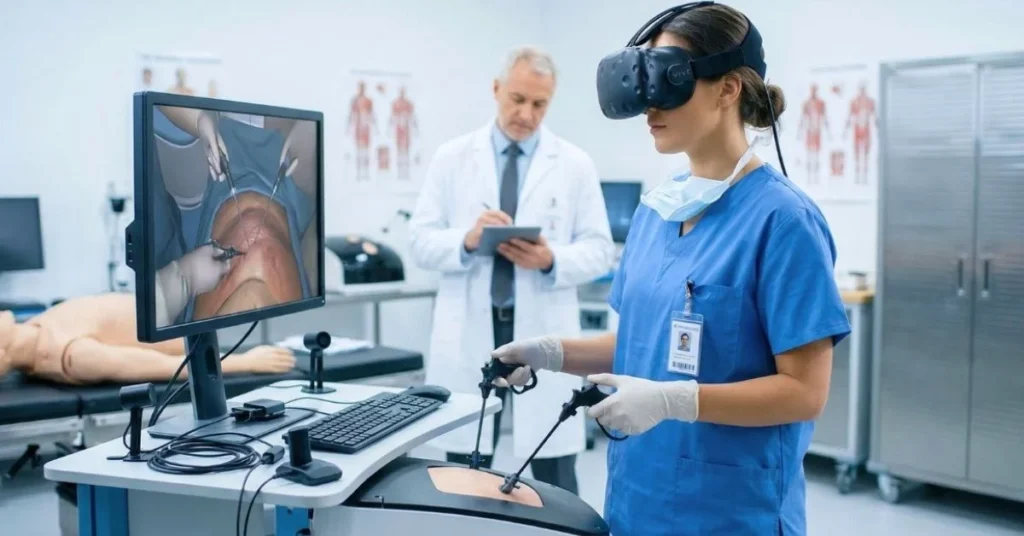
Immersive Medical Training for Residents
Virtual reality surgery training gives the residents an opportunity to train their surgical skills through virtual operating rooms, which display real surgical scenarios. The simulations cause a simulated reality of the whole operating room, which entails the presence of actual surgical equipment, operating room illumination, and the entire physical environment of the patient.
The execution of procedures also contributes to the practical experience of the trainees, and they are more competent to carry out medical procedures during real surgeries.
Laparoscopic Training Simulators
People living in the real world can enhance their surgical capabilities by operating in virtual operating rooms through virtual reality surgery training, which demonstrates real-life surgical scenarios. The simulations help in creating the real feel of the operating room as they involve real surgical instruments, real operating room lights, and the entire body of the patient.
Practice based on real-life surgical events enables trainees to be better prepared to carry out medical procedures during real-life surgical events.
Robotic Surgery Training Platforms
Laparoscopic surgery involves eye-hand coordination and skills. The VR simulators allow the trainees to perform the operations since they are able to utilize artificial surgical instruments in a simulated abdominal cavity.
The systems provide the trainees with immediate feedback on their performance, which makes them more precise and do more.
Minimally Invasive Procedure Practice
Minimally invasive surgeries require the use of small incisions to control instruments during surgical procedures. Trainees can use VR simulations to repeat the practice of these techniques until they reach expert-level skills.
The practice decreases the chance of complications that might occur during actual medical operations.
Competency-Based Surgical Skills Assessment
Virtual reality platforms enable performance tracking of surgeons through their detailed analytic capabilities. The system gathers data on surgeon performance through multiple metrics, which include measurement of precision and velocity, and their handling of instruments.
The assessments enable training programs to evaluate student competencies while guaranteeing that their training programs reach the necessary standards.
Haptic Feedback in Surgical Skills Training
Haptic feedback technology enables users to feel tactile sensations during virtual surgical simulations. The system enables surgeons to feel virtual tissue through its special devices, which create both resistance and pressure during their surgical operations.
The tactile feedback system enables surgeons to practice their delicate surgical skills through realistic simulations, which create authentic surgical environments.
Comparing Virtual Surgery with Cadaver-Based Training
Cadaver training has long been a cornerstone of surgical education, but it comes with limitations such as availability cost, and ethical concerns. The virtual surgery system provides an alternative that delivers unlimited practice opportunities with consistent anatomical models and the capacity to recreate uncommon medical conditions. Medical institutions now implement both training methods to develop extensive educational programs for physicians.
Benefits of Virtual Reality Surgery in Healthcare
Improving Surgical Precision and Accuracy
The surgical field gains from virtual reality technology, which enhances both precision and accuracy of surgical procedures
Reducing Surgical Errors and Complications
Surgeons use virtual reality systems to see human body structures through three-dimensional imaging which enables them to rehearse surgical techniques before actual surgeries. The surgical training method brings successful results because it creates better results for surgical operations.
Enhancing Patient Safety Outcomes
The surgical training method enables surgeons to detect their potential errors while they develop their surgical abilities through practice. The method leads to substantial decreases in both surgical mistakes and medical complications, according to research studies.
Cost-Effective Surgical Training Solutions
Better patient safety outcomes are achieved through the development of surgical skills and training. VR training programs reduce the possibility of surgical complications, and doctors do not presuppose their occurrence.
The program offers cost-effective ways of training on performing surgery due to the fact that it gives the trainees cost-effective ways of learning. Initial expenditure of VR systems results in expenses, but it generates savings in training expenses by being able to reduce the need of cadavers and real equipment and several operating rooms sessions.
Accelerating the Surgical Learning Curve
Virtual reality allows trainees to practice complex procedures repeatedly in a controlled environment. This accelerates skill development and helps surgeons reach proficiency more quickly.
Technology Behind Virtual Surgery Platforms
AI-Assisted Surgery and Predictive Modeling
We require AI that will be used in virtual environments in order to make virtual surgery platforms. The system uses AI algorithms to analyze patient information and surgical outcomes in order to determine optimal surgical procedures.
Motion Tracking and Real-Time Rendering Systems
It is a system that relies on motion tracking to track the movement of the surgeon and the instruments and recreate a virtual one. The system is also provided with real-time rendering technology that reacts to each of the actions a user can make in the simulation system in real time.
Surgical Navigation and 3D Modeling
High-end 3D imaging systems transform medical images into anatomy models. The models enable the surgeons to view the structures of the body of the patient at various angles prior to the surgery.
Surgical Simulation Software in the cloud.
Cloud-Based Surgical Simulation Software
Cloud-based platforms allow hospitals and schools to access surgical simulations from any location. The systems allowed individuals to study simultaneously while undergoing remote surgical training. Surgery virtual platforms allow surgeons to train in robotic surgery by linking them to robotic surgery.
Integration with Robotic Surgery Systems
The medical field applies virtual reality technology in its creation, with medical VR companies that produce new products in the field. Various technology companies develop high-end virtual reality medical platforms that are applied by surgical training facilities in the course of their training requirements.
Industry Trends in Virtual Reality in Surgery
Medical VR Companies and Innovation
Several technology companies are developing advanced VR solutions specifically designed for surgical training and planning. These innovations are expanding the capabilities of immersive medical technology.
FDA-Approved Surgical Simulation Devices
Regulatory agencies are beginning to approve VR-based surgical training devices, recognizing their effectiveness in improving medical education and patient safety.
Digital Transformation in Hospitals
Hospitals are undergoing rapid digital transformation as they adopt technologies such as artificial intelligence, robotics, and virtual reality. These tools are reshaping how healthcare professionals diagnose and treat patients.
Investment Growth in Healthcare Technology
Investment in healthcare technology continues to grow as governments, research institutions, and private companies recognize the potential of digital medical tools. Virtual reality surgery platforms are attracting significant funding for research and development.
Challenges of Virtual Surgery and Immersive Medical Training
High Implementation Costs
The document evaluates surgical training and planning through advanced virtual reality solutions, which technology companies have built for their specific development work. The medical field now has new possibilities through these technological advances, which combine virtual medical technology with immersive experiences.
Technical and Hardware Limitations
Regulatory agencies have started to accept VR-based surgical training devices because they demonstrate their ability to enhance medical education and protect patients.
Regulatory and Compliance Issues
Hospitals experience a fast digital transformation because they implement artificial intelligence, robotics, and virtual reality technologies. Healthcare professionals now use these technologies to create new methods for diagnosing and treating their patients.
Ethical Considerations in Digital Surgery
The healthcare technology market experiences continuous investment growth because governments, research institutions, and private companies see digital medical tools as future medical technologies. The research and development of virtual reality surgical platforms receive considerable financial support from investors.
Future of Virtual Reality Surgery and Surgical Simulation
AI-Powered Surgical Planning
The upcoming advancements in virtual reality technology will bring forth improved surgical simulation methods used in virtual surgeries. The upcoming virtual reality platforms will use advanced artificial intelligence systems to create personalized surgical treatment plans based on patient medical data analysis.
Remote Robotic Surgery Integration
The development of new networking technologies will enable surgeons to operate robotic systems remotely through virtual reality visual systems. The upcoming virtual reality systems will include advanced artificial intelligence systems that create personalized surgical treatment plans based on patient medical data assessment.
Personalized Surgical Rehearsal Platforms
Personalized surgical rehearsal platforms will allow surgeons to practice operations on patient-specific models, which will enhance their preparation and decrease the chance of surgical complications.
Metaverse Applications in Healthcare
The virtual medical environments of the future will transform into interactive digital spaces, which will enable surgeons, educators, and researchers to collaborate and learn through immersive training experiences.
Wearable Devices and Real-Time Data Analytics
Wearable medical devices can deliver continuous patient monitoring data during surgical training exercises, which enables surgeons to reach better decision-making outcomes during their operations.
FAQ’s About Virtual Reality for Surgery
How Is Virtual Reality Surgery Training Conducted?
Virtual reality surgery training requires VR headsets together with motion tracking devices and surgical simulation software to create training environments. Trainees enter immersive environments where they can perform simulated procedures using realistic digital instruments and anatomical models.
Can Virtual Surgery Replace Traditional Training?
Virtual surgery will not replace traditional training methods, which require cadaver practice and supervised operating room experience. However, it serves as a powerful complement that enhances surgical education.
Is Virtual Reality in Surgery Used During Live Procedures?
Certain VR technologies provide assistance during live procedures through surgical navigation systems and real-time visualization tools, which help guide surgeons.
What Is the Cost of Virtual Surgery Systems?
Virtual surgery systems demonstrate cost variability according to their required hardware and software components, together with training modules. High-end surgical simulators can cost thousands of dollars, but they often reduce long-term training expenses.
Does Virtual Reality Surgery Improve Patient Outcomes?
Research shows that virtual reality surgery training improves surgical precision while decreasing errors to create better patient safety outcomes, which result in superior healthcare results.